Here’s an uncomfortable truth about HR tech in 2026: most companies have more employee experience tools than they know what to do with. Performance platforms, engagement survey tools, HRIS dashboards, recognition apps, expense portals – and yet according to Gallup’s 2026 State of the Global Workplace report, global employee engagement fell to 20% in 2025, its lowest level since 2020, costing the world economy an estimated $10 trillion in lost productivity.
More tools. Less engagement. The math doesn’t work.
The reason isn’t a shortage of software. It’s friction. Work friction includes aspects of employees’ work that should be easy but are hard or frustrating – and in 2026, a significant portion of that friction comes from the HR tech stack itself. Employees logging into separate portals to request PTO. Finance teams chasing receipts submitted through three different channels. IT requests are disappearing into email threads. The tools designed to improve the employee experience are often the ones creating the worst of it.
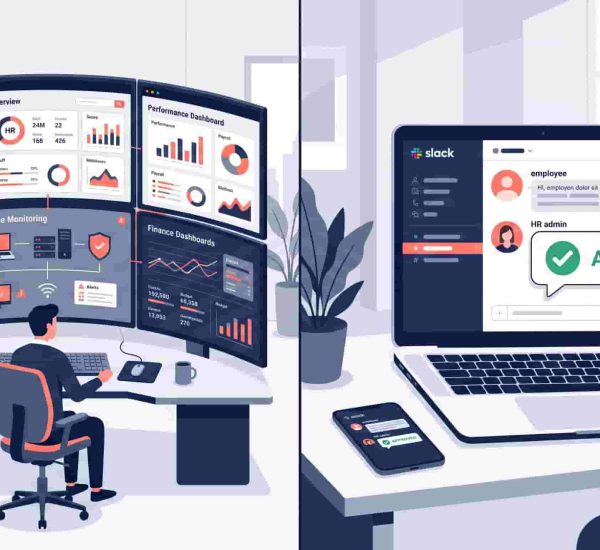
The shift happening in 2026 is away from standalone platforms and toward what we’d call zero-friction HR – tools that live inside the flow of work itself, particularly inside Slack and Microsoft Teams, where most modern teams already spend their day. HR software has moved from being tools of administration to strategic engines for talent growth, and the best implementations are the ones that feel invisible – because they work inside the tools employees already use.
This guide covers 15 of the best employee experience software tools in 2026, what each one is actually built for, and how to think about building a stack that reduces friction rather than adding to it.
The best employee experience software in 2026 includes a mix of comprehensive platforms like Lattice, Culture Amp, and Workday for performance and engagement, and zero-friction Slack-native tools like AttendanceBot, ExpenseTron, and OfficeAmp that handle everyday HR workflows inside the tools employees already use. Employee experience is not a single platform – it is the sum of every daily workflow: time tracking, leave requests, expense reporting, and internal requests. The tools that improve it most are the ones that create the least friction in getting those workflows done.
How to Choose the Right Employee Experience Software
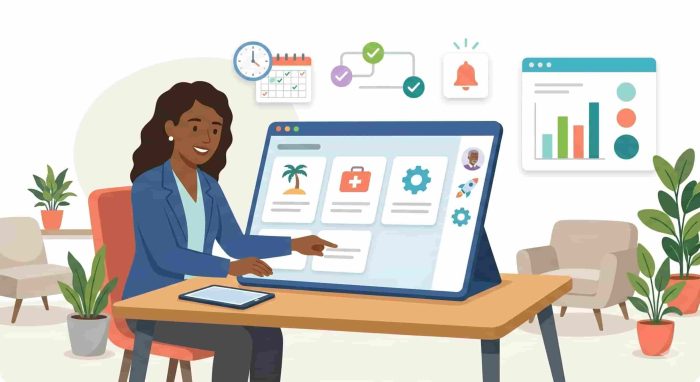
Before evaluating individual tools, it helps to be clear about which layer of employee experience you’re actually trying to improve.
If your team is under 50 people and runs on Slack – start with zero-friction workflow tools. The biggest experience gains come from making everyday tasks like PTO requests, expense submission, and IT requests faster and less painful. Comprehensive platforms are often overkill at this stage.
If your team is 50–300 people in a hybrid setup – you likely need both. A core HRIS or performance platform for structured processes, and Slack-native tools for the daily workflow layer where adoption determines everything.
If your team is enterprise-scale or primarily on-site – comprehensive platforms like Workday or Rippling may be worth the implementation investment. The complexity is justified when the team size and process maturity demand it.
If your team is fully remote or distributed – prioritize tools that work asynchronously, integrate with Slack or Teams natively, and don’t require a separate login for every action.
Quick Comparison
| Tool | Category | Best For | Slack/Teams Native |
| AttendanceBot | Time tracking & leave | Slack-first, remote, hybrid teams | ✅ Yes |
| ExpenseTron | Expense management | Slack-based expense workflows | ✅ Yes |
| OfficeAmp | Internal helpdesk | Employee request management in Slack | ✅ Yes |
| Lattice | Performance management | Mid-market performance culture | ⚠️ Integration |
| Culture Amp | Engagement & performance | People-first companies | ⚠️ Integration |
| Bonusly | Recognition | Peer recognition programs | ⚠️ Integration |
| Donut | Connection & onboarding | Remote team culture | ✅ Yes |
| Rippling | HR + IT + payroll | All-in-one for scaling teams | ⚠️ Integration |
| Deel | Global HR & payroll | International distributed teams | 🔄 Partial |
| BambooHR | Core HRIS | SMB HR record management | ⚠️ Integration |
| HiBob | Modern HRIS | Growing mid-market teams | ⚠️ Integration |
| Gusto | Payroll + HR | US small business payroll | ⚠️ Integration |
| Workday | Enterprise HCM | Large, complex organizations | ⚠️ Integration |
| 15Five | Continuous performance | Weekly check-ins and OKRs | ⚠️ Integration |
| Leapsome | Performance + learning | OKR-aligned performance culture | ⚠️ Integration |

How to Choose the Right Employee Experience Software
The 15 Best Employee Experience Software Tools in 2026
1. AttendanceBot – Zero-Friction Time Tracking and Leave Management
Employee experience isn’t a single tool anymore. It’s the sum of everyday workflows — time tracking, PTO, expenses, and internal requests. The best teams in 2026 don’t manage this in separate apps. They run it directly inside Slack. AttendanceBot is one of such tools – and that’s precisely what makes it valuable in this context. It handles the daily workflows that affect employee experience directly: clocking in and out, requesting time off, checking leave balances, managing hybrid team attendance, and running daily standups. All of it happens inside Slack or Microsoft Teams.
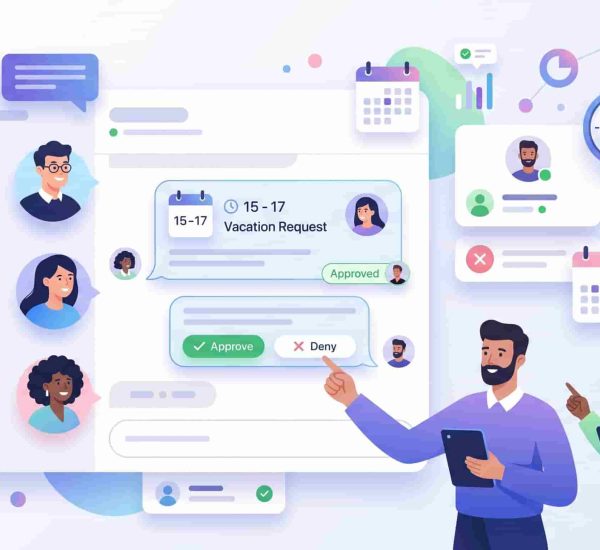
For most employees, the experience of HR isn’t shaped by their engagement survey score. It’s shaped by how easy it is to request a day off on a Friday afternoon. AttendanceBot makes that a single Slack message. It integrates with Gusto, BambooHR, ADP, Rippling, Wagepoint, and Jira – meaning it adds the Slack layer to whatever HRIS your team already uses without replacing it.
Best for: Slack-first, remote, and hybrid teams that want everyday HR workflows – time tracking, PTO, attendance – to happen inside their existing workspace.
2. ExpenseTron – Expense Management Without the Portal
ExpenseTron brings expense reporting into Slack entirely. Employees submit receipts by sending an image to the bot, mileage is calculated automatically, approvals happen through Slack, and approved expenses sync directly to QuickBooks or Xero.
The employee experience angle here is simple: nobody enjoys expense reporting. The only version of expense reporting that doesn’t actively create friction is one that takes under a minute and happens where you already work. For teams on Slack, that’s what ExpenseTron delivers.
Best for: Small to mid-sized teams on Slack that want a frictionless expense submission and approval workflow without a separate expense portal.
3. OfficeAmp – Internal Helpdesk for Slack Teams
OfficeAmp manages employee requests – IT tickets, HR queries, facilities issues, and general workplace service orders – inside Slack and Microsoft Teams. Requests are automatically routed to the right person, tracked to resolution, and surfaced in a central dashboard without any employee leaving their Slack workspace.
The experience impact is felt in the absence of frustration: requests don’t get lost, employees don’t wait days for acknowledgment, and ops teams have visibility into what’s open without manually tracking DMs. OfficeAmp’s Smart QnA feature also answers common questions automatically – reducing ticket volume before it’s created.
Best for: Small business ops and HR teams that need employee request management inside Slack without a standalone helpdesk platform.
4. Lattice – Performance Management With AI Assistance
Lattice is one of the most comprehensive employee experience platforms for mid-market companies. Its AI Agent synthesizes goal completion data, peer feedback, and 1:1 notes into structured performance review drafts – significantly reducing manager preparation time. It covers continuous performance management, 360-degree feedback, engagement surveys, and talent reviews in one platform.
Lattice is the right choice when you need a genuine performance culture infrastructure, not just a review tool. It’s stronger for teams with dedicated HR functions that can invest in the configuration and ongoing management of the platform rewards.
Best for: Mid-market companies building a continuous performance management culture with dedicated HR support.
5. Culture Amp – Engagement and Performance Connected
Culture Amp built its reputation on employee engagement surveys before expanding into performance management – and the integration of the two remains its strongest differentiator. It connects engagement scores with performance data, giving HR teams visibility into how review outcomes correlate with team sentiment and retention risk.
Its AI features scan review language for bias patterns and identify engagement themes across the organization. For companies where culture and performance are treated as genuinely connected priorities, Culture Amp offers a more integrated view than most alternatives.
Best for: People-first companies where employee engagement and performance accountability are managed as a single connected function.
6. Bonusly – Peer Recognition That Actually Gets Used
Bonusly is a peer recognition platform that gives employees a small monthly allowance of points to award to colleagues for good work. Recipients can redeem points for gift cards, experiences, or charitable donations. It integrates with Slack, making recognition a natural part of the daily communication flow.
Recognition is one of the clearest drivers of engagement – Gallup’s research shows that about half of U.S. employees were watching for or seeking a new job in 2024, the highest level of turnover risk in nine years, and that employers could have prevented 42% of voluntary departures through basics, including regular recognition. Bonusly operationalizes that at the team level without requiring a manager-led program.
Best for: Companies that want to build a recognition culture with low administrative overhead and high employee visibility.
7. Donut – Remote Connection and Onboarding
Donut is a Slack-native tool that randomly pairs team members for virtual coffee chats, facilitates structured onboarding buddy programs, and runs team celebrations for birthdays and work anniversaries. It addresses one of the most consistently documented challenges of remote work: the erosion of informal connection that happens naturally in physical offices.
For fully remote or heavily hybrid teams, Donut adds a relationship layer to Slack that doesn’t require any HR-led initiative. It runs automatically once configured.
Best for: Remote and hybrid teams that want to build connection and onboarding culture inside Slack without manual coordination.
8. Rippling – Unified HR, IT, and Payroll
Rippling unifies HR, IT provisioning, and finance in one platform. When a new employee joins, Rippling automatically provisions their laptop, software access, Slack account, and payroll enrollment simultaneously – eliminating the manual coordination between HR and IT that most growing companies struggle with.
For tech-forward companies where HR and IT are closely linked and automation depth matters, Rippling is the most comprehensive option on this list. The tradeoff is cost and complexity – modules are priced separately and the implementation investment is significant.
Best for: Tech-forward companies that want to unify HR, IT provisioning, and payroll in one automated system.
9. Deel – Global HR and Payroll
Deel handles employer-of-record employment in 150+ countries, contractor management, and global payroll – making it the most capable option for companies with international distributed teams. Where most HRIS platforms are built around US employment structures, Deel’s infrastructure is genuinely global.
For companies hiring across multiple countries simultaneously, Deel removes the compliance complexity that makes international hiring so operationally demanding.
Best for: Companies with international teams, global contractors, or multi-country payroll requirements.
10. BambooHR – Core HRIS for Small Businesses
BambooHR is a solid HRIS for small businesses managing core HR records – employee data, basic time off tracking, onboarding, and applicant tracking. It’s user-friendly, well-established, and integrates with a wide range of payroll and HR tools including AttendanceBot for Slack-native leave management.
Where BambooHR shows its limitations is in the daily workflow layer – the leave requests and time tracking where employee experience is actually felt. For teams that want Slack-native workflows on top of BambooHR’s record management, AttendanceBot’s BambooHR integration covers exactly that gap.
Best for: Small businesses that need a solid core HRIS without the complexity of enterprise platforms.
11. HiBob – Modern HRIS for Growing Teams
HiBob (“Bob”) targets the 50–500 employee range with a more modern interface than BambooHR, stronger culture and engagement features, and better analytics. HR teams switching to HiBob frequently cite its UI and engagement tooling as the primary reason for moving.
It doesn’t publish pricing and requires custom quotes, but for growing teams that have outgrown BambooHR’s interface and analytics, HiBob is worth serious evaluation.
Best for: Growing mid-market companies (50–500 employees) that want a more capable HRIS with stronger engagement analytics.
12. Gusto – Payroll and HR for US Small Businesses
Gusto is the most recommended payroll-first alternative for US small businesses. It handles automated tax filing, multi-state compliance, benefits administration, and contractor payments as core features – not add-ons. For teams whose primary HR pain point is payroll accuracy and compliance, Gusto is the most direct solution.
It doesn’t work natively inside Slack, but AttendanceBot’s Gusto integration syncs approved time off and hours directly into Gusto payroll – giving Slack-first teams the best of both.
Best for: US-based small businesses prioritizing payroll accuracy and tax compliance as their primary HR need.
13. Workday – Enterprise HCM at Scale
Workday is the benchmark enterprise HR platform for large, complex organizations. Its workforce planning analytics, AI-powered recommendations, and integrated talent development tools give enterprise HR teams visibility and capability that smaller platforms don’t approach. The tradeoff is cost – Forbes estimates starting pricing around $99/user/month – and an implementation timeline measured in months rather than days.
For organizations where Workday’s depth is genuinely needed, it’s the most capable option. For organizations where it isn’t, it’s an expensive source of friction.
Best for: Large enterprises with complex global workforce management needs, dedicated HR operations teams, and implementation budgets to match.
14. 15Five – Continuous Performance Management
15Five is built around the philosophy that weekly check-ins, OKR tracking, and pulse surveys produce better performance outcomes than annual reviews – and its product design reflects this throughout. Regular check-ins create a continuous data stream that makes formal reviews a natural summary of ongoing conversations rather than a cold assessment from scratch.
Its AI features include automated review summarization, objective performance scoring, and manager coaching recommendations – particularly well-suited for first-time managers who benefit from structured guidance.
Best for: Companies replacing the annual review model with continuous feedback culture supported by structured weekly check-ins.
15. Leapsome – Performance, Learning, and Compensation Aligned
Leapsome combines performance reviews, OKR tracking, learning management, and compensation planning in one platform. Its calibration tools help HR teams normalize ratings across departments, and its compensation module connects review outcomes directly to pay decisions – removing the disconnect between performance conversations and rewards that frustrates employees at many organizations.
Best for: Companies that want to connect performance reviews directly to compensation decisions and career development planning in one integrated system.
Slack-Native vs App-Based HR Tools
Slack-Native vs App-Based HR Tools: Why It Matters for Adoption
The benefits of reducing digital friction include improved productivity, faster issue resolution, and reduced overhead through automation – and nowhere is this more relevant than in the daily HR workflows that employees interact with most.
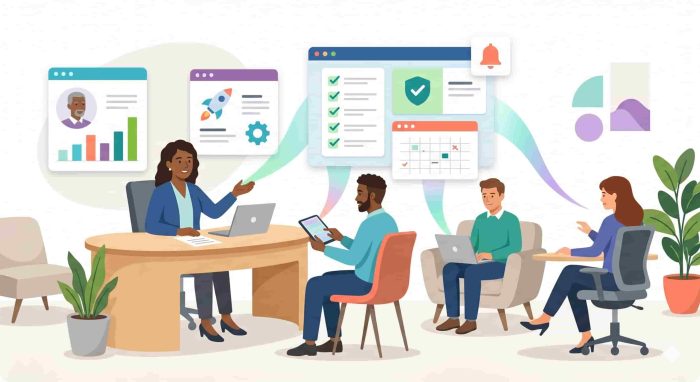
The fundamental difference between Slack-native tools and app-based tools isn’t features. It’s behavioral. An employee who needs to request PTO in an app-based system has to remember the login, navigate to the right screen, and complete a form. An employee using a Slack-native tool sends a message. The second path has zero friction relative to how they’re already working. The first path has enough friction that many employees delay, batch, or avoid it entirely.
This behavioral gap shows up consistently in adoption data. Tools that employees don’t use don’t improve their experience – regardless of how capable the platform is on paper.
For small and mid-sized teams, the practical implication is that Slack-native tools for everyday workflows – time tracking, leave requests, expense submission, internal requests – will almost always outperform app-based alternatives on adoption, data quality, and employee satisfaction.
The Ideal Employee Experience Stack in 2026
Employee experience isn’t a single platform decision. It’s a stack – and the best stacks are built by layer, not by looking for one tool that does everything.
Here’s what a zero-friction stack looks like for a Slack-first team in 2026:
Daily workflow layer (zero-friction, Slack-native):
- Time tracking, PTO, and hybrid attendance → AttendanceBot
- Expense submission and approvals → ExpenseTron
- Internal requests and IT tickets → OfficeAmp
Performance and engagement layer:
- Continuous performance management → Lattice or 15Five
- Employee engagement and culture → Culture Amp
Recognition layer:
- Peer recognition → Bonusly
- Remote connection → Donut
Core HR and payroll layer:
- US small business payroll → Gusto
- Growing mid-market HRIS → HiBob
- Global distributed teams → Deel
- Enterprise HCM → Workday
The goal isn’t to minimize the number of tools. It’s to ensure that every tool in the stack reduces friction rather than creating it – and that the tools handling the highest-frequency employee interactions are the ones with the lowest behavioral overhead.
Frequently Asked Questions
What is employee experience software?
Employee experience software refers to any tool that improves how employees interact with their workplace – from HR platforms managing performance and engagement to workflow tools handling time tracking, expense reporting, and internal requests. In 2026, the most effective employee experience tools are those that reduce friction in everyday workflows, particularly by working inside Slack or Microsoft Teams where employees already spend their day.
What is the best employee experience software in 2026?
The best employee experience platforms depend on team size and working model. For enterprise teams, Workday and Rippling offer the deepest HR infrastructure. For mid-market teams, Lattice and Culture Amp lead on performance and engagement. For Slack-first, remote, and hybrid teams, zero-friction tools like AttendanceBot, ExpenseTron, and OfficeAmp improve the daily workflow experience without adding platform overhead.
What are zero-friction HR tools?
Zero-friction HR tools are employee productivity tools designed to handle HR workflows – time off requests, expense submissions, IT tickets – inside the platforms employees already use, particularly Slack and Microsoft Teams. Instead of requiring a separate login or portal, these tools work through familiar chat interfaces, reducing adoption barriers and improving data quality.
Are Slack HR tools as capable as standalone HR platforms?
For everyday workflows, yes. Slack HR tools like AttendanceBot handle time tracking, leave management, and attendance with the same functional depth as standalone tools – and significantly better adoption because employees submit and approve inside their existing workspace. For complex processes like payroll, compliance, and performance management, dedicated platforms remain stronger.
How do I build an employee experience stack without tool sprawl?
Build by layer. Use a core HRIS or payroll platform for structured HR processes. Add Slack-native tools for the daily workflow layer – time tracking, expenses, internal requests – where adoption determines everything. Add a performance or engagement platform if your team size and process maturity justify it. Every tool in the stack should reduce friction, not add to it.
What is the difference between employee experience and employee engagement software?
Employee engagement software – tools like Culture Amp, Bonusly, and 15Five – focuses on measuring and improving how connected and motivated employees feel. Employee experience software is broader – it encompasses every tool that shapes how employees interact with their workplace, including the operational tools that handle daily tasks like time tracking, expense reporting, and IT requests. In 2026, the line between the two categories is increasingly blurred.
The Bottom Line
The best employee experience software stack in 2026 is not a single platform. It’s a thoughtful combination of tools – a performance layer, an engagement layer, a payroll and HRIS layer, and a daily workflow layer – where each tool earns its place by reducing friction rather than creating it.
If your team already runs on Slack, start with the daily workflow layer. Tools like AttendanceBot, ExpenseTron, and OfficeAmp can be set up in minutes—and eliminate the most common HR friction points immediately.