There’s a moment every HR professional knows well. It’s 4pm on a Thursday. There are eleven Slack messages about shift swaps, three leave requests waiting on approval, a timesheet discrepancy from last week, and an all-hands meeting in twenty minutes. And somewhere in that pile is the actual strategic work, the stuff that requires human judgment, empathy, and insight, buried under a mountain of tasks that, honestly, a well-designed system should be handling automatically. For years, the answer was supposed to be chatbots. Ask the bot, get an answer, move on. But chatbots wait to be asked. They respond. They don’t act. In 2026, agentic AI in HR is doing something fundamentally different, and the distinction is changing what HR teams can actually accomplish in a day.
Agentic AI in HR refers to autonomous AI systems that plan, execute, and monitor multi-step HR workflows without waiting for human prompts. Unlike chatbots that respond to questions, AI agents act proactively – resolving scheduling conflicts, routing leave approvals, tracking attendance, and flagging anomalies before a manager has to intervene. In 2026, HR teams adopting agentic workflows are reclaiming admin hours and redirecting them toward strategic work that requires human judgment.
What Is Agentic AI?
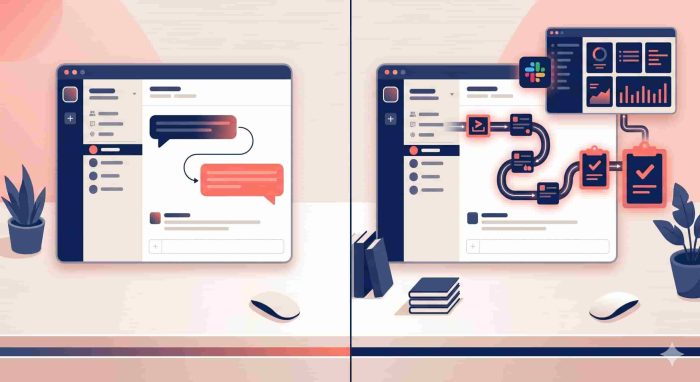
Agentic AI is AI that doesn’t just respond to prompts; it pursues goals. It plans, executes multi-step tasks, monitors outcomes, and adapts when something changes.
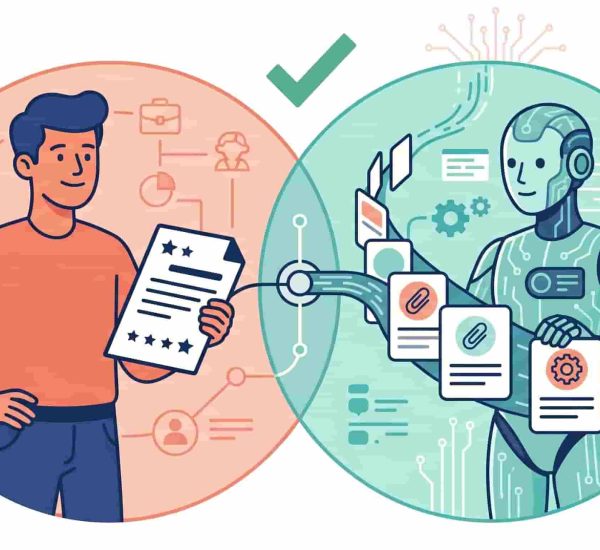
Think of the difference this way. A chatbot is like a very knowledgeable colleague who answers questions when you ask them. An AI agent is like a highly capable executive assistant who notices a scheduling conflict, resolves it before it becomes a problem, notifies the relevant people, and updates the records without being asked.
Gartner predicts that by 2028, 33% of enterprise software applications will include agentic AI, up from less than 1% in 2024. That’s not a gradual evolution. That’s a structural shift in how software works, and HR is one of the functions where the impact is most immediate.

What Is Agentic AI?
From Passive Tools to Proactive AI Assistants
The evolution from chatbots to agents didn’t happen overnight. It followed a predictable arc.
First came rule-based automation if an employee submits a PTO request, send an email to their manager. Useful, but brittle. One exception, and the whole system breaks down.
Then came generative AI tools that could draft a performance review or summarize a policy document on request. Genuinely helpful, but still reactive. Still waiting to be asked.
Now comes the agent layer. Proactive AI assistants that monitor conditions, identify what needs to happen next, take action within defined parameters, and escalate to humans only when genuinely necessary. Gartner reports that AI adoption in HR has climbed from just 19% in 2023 to 61% in 2025, a transformation happening faster than most predicted. The shift from reactive to proactive is what’s driving that acceleration.
Why HR Teams Are Shifting to Agentic Workflows
The Admin Overload Is Real
Deloitte found that HR staff spend up to 57% of their time on administrative, routine tasks, leaving little room for strategic initiatives. That’s more than half the working day consumed by work that, in many cases, follows a predictable pattern: a request comes in, policy is checked, approval is routed, record is updated.
AI automation for HR teams isn’t about replacing HR professionals. It’s about returning that 57% to work that actually requires them.
Fragmented Tools Are Slowing Everything Down
Most HR teams in 2026 operate across a patchwork of tools: an HRIS here, a scheduling platform there, a Slack workspace where most actual communication happens, and a spreadsheet that somehow still tracks the thing nobody got around to automating.
Agentic workflows in HR thrive when they operate across this stack rather than within one system. Agents need to work across multiple software systems to be truly effective today. Agents operate within a system, which is useful and a great starting point, but they need to partner with other systems to deliver high-value business outcomes.
The Need for Systems That Act, Not Just Alert
Notifications are not solutions. An HR system that sends an alert when a shift goes uncovered has not solved the problem; it has handed the problem back to a human, digitally. Intelligent automation in HR means the system doesn’t just flag the gap; it identifies available team members, checks their hours and preferences, proposes a resolution, and confirms it all before the manager has to get involved.
Real Use Cases: Agentic AI in Everyday HR Workflows
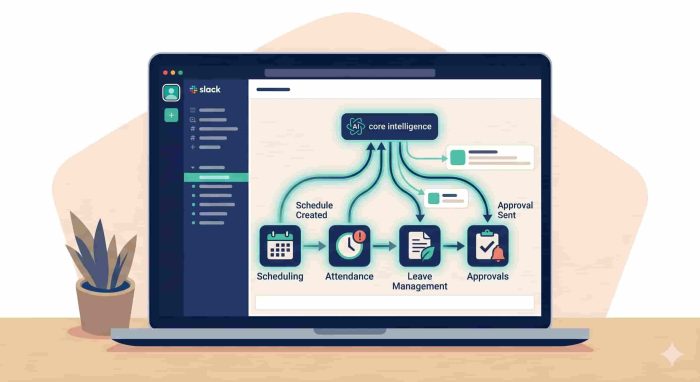
AI Scheduling Automation and Conflict Resolution
Scheduling conflicts are low-stakes individually and high-volume collectively. When two employees request the same day off, and coverage requirements mean only one can go, a traditional system creates a notification and waits. An employee scheduling software AI layer identifies the conflict, checks team availability, applies leave policy rules, suggests a resolution, and routes only the exception the case where human judgment is genuinely required, to the manager.
AI-Powered Attendance Tracking
Manual attendance tracking is one of the highest-friction, lowest-value tasks in HR operations. An AI-powered attendance tracking system monitors check-ins, flags anomalies, cross-references scheduled hours, and compiles timesheet reports without requiring anyone to chase data or reconcile spreadsheets. When patterns emerge, an employee whose late arrivals have increased over six weeks, for instance, the system surfaces that context rather than waiting for a manager to notice.
Leave Management Without the Back-and-Forth
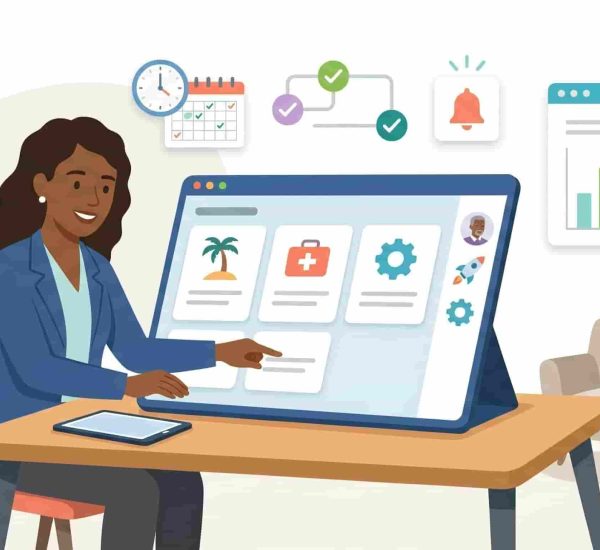
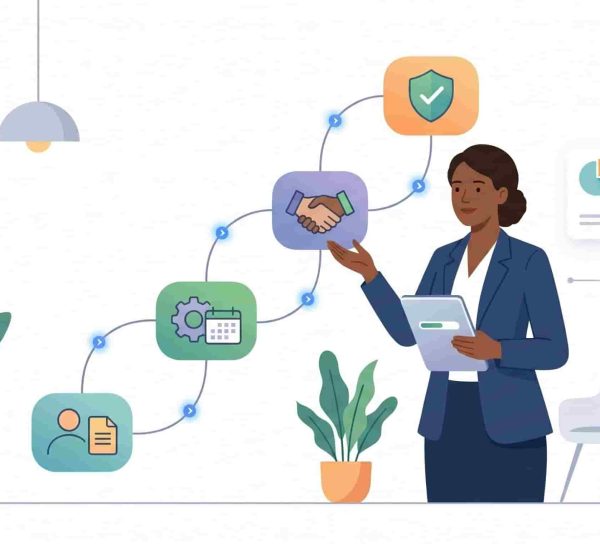
A well-designed HR workflow automation layer handles the standard leave request entirely: checking the policy, verifying the balance, routing to the approver, confirming with the employee, and updating the record. The manager sees only requests that require a judgment call not every routine approval that policy already answers.
Shift Planning at Scale
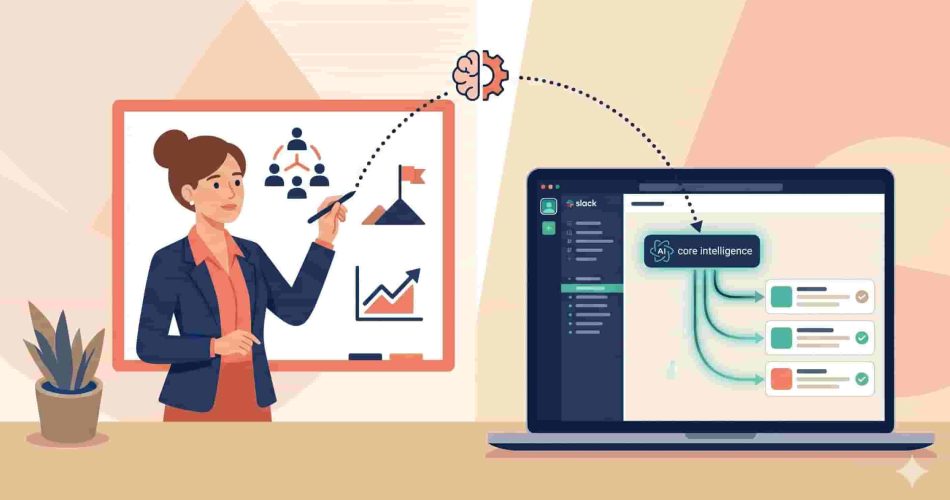
For teams with variable scheduling needs, AI in workforce management means shift plans that adapt to availability changes in real time rather than requiring a manual rebuild every time someone calls in sick. The agent identifies the gap, cross-checks availability, and proposes a fill all within the communication platform the team already uses.
Benefits of Agentic AI in HR
Time Back for Strategic Work
PwC’s analysis found that under human supervision, agents can automate or augment large parts of almost every HR workflow. More than half of operational work can be agent-assisted or fully agent-driven. That capacity doesn’t disappear; it gets reinvested in the advisory, cultural, and strategic work that only humans can do.
Fewer Errors in High-Volume Processes
Payroll discrepancies, missed approvals, and compliance gaps most commonly originate in manual, repetitive processes exactly where AI automation for HR teams is most reliable. Consistent, policy-grounded automation reduces error rates in proportion to how much manual handling it replaces.
A Better Day-to-Day Employee Experience
Employees who can submit a leave request in ten seconds and receive a confirmation in minutes have a materially different experience of HR than those waiting three days for a response to an email. Intelligent automation in HR improves the employee experience not through grand gestures but through the consistent reliability of routine interactions.
Challenges and Considerations
Trust Takes Time to Build
92% of CHROs anticipate that AI will be further integrated into the workforce this year, but 72% of HR professionals said they still believe non-technical barriers would prevent their function from being completely automated, even if technical barriers were removed. The preference for human interaction isn’t irrational; it reflects real concerns about accountability, fairness, and the limits of what automated systems can judge correctly.
Agentic workflows in HR earn trust incrementally. Start with high-volume, low-stakes tasks where the policy is clear and the outcome is verifiable. Expand from there.
Control vs Automation
The goal of agentic AI in HR is not to remove humans from HR; it’s to position humans in the decisions that require them. Most strategy work shaping talent programs, workforce design, and culture will remain human-led. But AI agents can help drive or assist roughly 50% of advisory work. Designing the human oversight layer is as important as designing the automation layer.
Implementation Requires Clean Data First
Even the most advanced agent can’t effectively automate a multi-step workflow if it can’t use integrated data. Before deploying HR workflow automation tools, audit the quality and consistency of the data that those tools will rely on. Agents amplify the quality of their inputs good data produces reliable automation; inconsistent data produces unreliable automation at scale.
The Future of HR Technology 2026: Agent-Led Workplaces
The Future of HR Technology 2026: Agent-Led Workplaces
CHROs project a 327% growth in agent adoption by 2027, with 80% projecting that most workforces will have people and AI agents working together within five years. That projection reflects something more than enthusiasm for new technology. It reflects a structural recognition that the administrative load currently carried by HR teams is not sustainable at the pace modern organizations operate.
The future of HR technology in 2026 and beyond is not a single platform that does everything; it’s a connected layer of specialized agents, each handling the workflows they’re best suited for, coordinating with each other, and deferring to humans when the situation requires it. The HR professional’s role doesn’t diminish in this model. It evolves from managing transactions to overseeing agents, interpreting their outputs, and applying the human judgment that remains genuinely irreplaceable.
Frequently Asked Questions About Agentic AI in HR
What is agentic AI in HR?
Agentic AI in HR refers to autonomous AI systems that execute multi-step HR workflows independently — handling tasks like leave approvals, attendance tracking, shift scheduling, and compliance monitoring without requiring a human prompt at each step. Unlike traditional automation, agentic systems can reason through exceptions and adapt when conditions change.
How is agentic AI different from a chatbot?
A chatbot responds when asked. Agentic AI acts proactively — monitoring conditions, identifying what needs to happen next, and executing tasks within defined parameters without waiting for input. In HR, this means the system resolves a scheduling conflict or routes an approval before a manager notices the problem, not after they ask about it.
What are the best use cases for agentic AI in HR?
The highest-impact use cases for agentic workflows in HR are high-volume, rule-based processes — leave management, AI-powered attendance tracking, shift scheduling, timesheet consolidation, and policy-based approval routing. These are tasks that happen constantly, follow predictable patterns, and shouldn’t require human judgment every time.
Is agentic AI in HR ready for small and mid-sized businesses?
Yes, though the entry point looks different from enterprise deployments. Slack HR automation tools and Microsoft Teams HR tools like AttendanceBot bring agentic-style workflow automation to smaller teams without a large implementation project. Starting with high-frequency, low-variance tasks like time tracking and leave management delivers immediate value without enterprise-scale infrastructure.
What are the risks of using agentic AI for HR workflows?
The primary risks are data quality, bias in automated decisions, and insufficient human oversight. Intelligent automation in HR works best when agents operate on clean, integrated data and when humans remain accountable for decisions that affect employees directly. Starting with low-stakes, high-volume tasks and expanding gradually is the most responsible adoption path.
How much admin time can agentic AI save HR teams?
Deloitte found that HR staff currently spend up to 57% of their time on administrative tasks. PwC’s analysis found that more than half of HR operational work can be agent-assisted or fully agent-driven under human supervision. The actual time saved depends on which workflows are automated and how well the tools integrate with existing systems — but for most teams, the gains are measurable within the first month of deployment.
Will agentic AI replace HR professionals?
No. AI automation for HR teams is designed to handle the predictable and repetitive — not the complex, relational, or strategic. PwC’s research found that most strategy work in HR, including talent program design, workforce planning, and culture initiatives, will remain human-led. The role of HR professionals evolves toward overseeing agents, interpreting their outputs, and focusing on the work that requires genuine human judgment.
Conclusion
The shift from chatbots to agents isn’t a software update – it’s a rethinking of where human attention belongs in HR operations. Routine is expensive when it consumes the people best equipped to handle the irreducibly complex.
Agentic AI in HR works best not when it replaces HR professionals but when it handles the predictable so they can focus on the unpredictable. The teams that get this right in 2026 won’t just be more efficient – they’ll be structurally different from those still managing workflows one approval at a time.
A practical place to start is the workflows that happen most often and follow the clearest patterns – time tracking, leave requests, shift scheduling, attendance. These are high-volume, low-variance tasks where HR workflow automation tools deliver immediate, measurable time savings without requiring a large implementation project. Tools like AttendanceBot handle exactly this layer inside Slack and Microsoft Teams — quietly, in the background, without asking employees to change how they work.
The question isn’t whether to adopt agentic workflows in HR. It’s which workflows to start with — and how quickly to build from there.