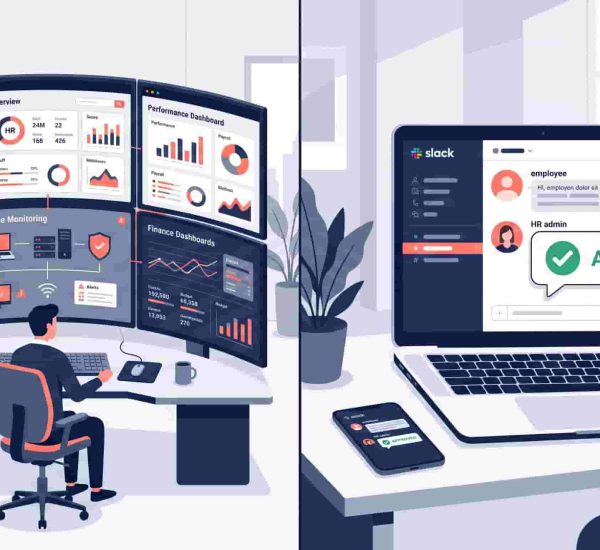
Most teams start with a simple question: how do we track time off without a spreadsheet? Both Vacation Tracker and AttendanceBot answer that question well. They both work inside Slack and Microsoft Teams. They both handle leave requests, approvals, and PTO balances without employees navigating a separate portal. For a team with straightforward leave needs, either would be a significant upgrade over manual tracking.
The difference emerges when leave management gets complicated — and for growing, hybrid, and global teams, it almost always does. Multiple leave types. Accrual rules that vary by tenure or location. Shift scheduling that intersects with leave. Attendance tracking for employees split between office and remote. Time tracking that feeds into payroll.
That’s where the comparison between Vacation Tracker vs AttendanceBot gets genuinely meaningful.
Vacation Tracker is a purpose-built leave management platform supporting up to 25 customizable leave types, PTO accruals, TOIL, carryovers, seniority-based rules, and location-based policies — all inside Slack, Microsoft Teams, and Google Workspace. It is best for teams whose primary need is flexible, automated leave management with a clean Slack experience. AttendanceBot covers leave management alongside attendance tracking, time tracking, shift scheduling, timesheets, and hybrid work visibility — making it the stronger choice for organizations that need workforce management beyond leave in one Slack-native platform. For teams with complex PTO policies who also need attendance, scheduling, and payroll-ready exports, AttendanceBot offers broader operational coverage. For teams whose complexity lives purely in leave rules and types, Vacation Tracker is a genuinely strong dedicated option.
Vacation Tracker vs AttendanceBot: Quick Verdict
Choose Vacation Tracker if:
- Leave management is your primary — and possibly only — HR automation need
- You need up to 25 customizable leave types with automated accruals, TOIL, and carryovers
- Your team uses Slack, Microsoft Teams, or Google Workspace and wants a focused, easy-to-configure leave tool
- Setup speed matters — Vacation Tracker is operational in under five minutes
Choose AttendanceBot if:
- You need leave management alongside attendance tracking, time tracking, shift scheduling, and timesheets in one platform
- Your team is hybrid and you need visibility into who’s in office vs remote, not just who’s on leave
- You manage shift-based or hourly employees whose schedules intersect with leave approvals
- You need payroll-ready exports that combine hours worked, overtime, and approved leave in one structured report
Vacation Tracker vs AttendanceBot: Comparison Table
| Vacation Tracker | AttendanceBot | |
| Best for | Leave-focused teams wanting simplicity | Teams needing leave + attendance + scheduling |
| Slack integration | ✅ Native | ✅ Native |
| Microsoft Teams | ✅ Yes | ✅ Yes |
| Google Workspace | ✅ Yes | ⚠️ Limited |
| Leave types | Up to 25 customizable | Multiple types configurable |
| PTO accruals | ✅ Automated, tenure-based | ✅ Yes |
| TOIL | ✅ Yes | ✅ Yes |
| Carryover rules | ✅ Yes | ✅ Yes |
| Location-based policies | ✅ Yes | ✅ Yes |
| Attendance tracking | ❌ Leave only | ✅ Full attendance |
| Time tracking | ❌ No | ✅ Yes |
| Shift scheduling | ❌ No | ✅ Yes |
| Timesheets | ❌ No | ✅ Yes |
| Hybrid work visibility | ⚠️ Leave visibility only | ✅ In-office vs remote tracking |
| Payroll exports | ✅ Leave data | ✅ Hours + leave combined |
| Setup time | Under 5 minutes | Slightly longer — more to configure |
1. Managing Complex Leave Policies
This is where both tools are stronger than most people expect — and where the comparison is most nuanced.
Vacation Tracker supports accruals, TOIL, carryovers, and seniority-based rules without workarounds, and allows up to 25 customizable leave types, location-based leave policies, and requests in hourly increments. For teams whose complexity is entirely leave-rule complexity — multiple categories, automated accruals, pro-rated quotas — Vacation Tracker handles this well and is genuinely purpose-built for it.
AttendanceBot also supports multiple leave types, accruals, TOIL, and location-based configurations. The difference isn’t in leave rule flexibility — both handle complex policies capably. The difference is in what surrounds leave management. AttendanceBot’s leave management system is one component of a broader workforce management platform. Vacation Tracker’s leave management is the whole product.
For teams whose HR complexity is purely leave-policy complexity, Vacation Tracker’s focused design is an advantage — less to configure, faster to set up. For teams where leave intersects with attendance records, shift schedules, and timesheet exports, AttendanceBot’s integrated approach avoids the need for multiple tools.
2. PTO Accruals and Carryovers
Both platforms handle automated accrual tracking. Vacation Tracker supports automated accruals with configurable caps and advanced leave rules, including tenure-based accruals and the ability to allow advance booking against future accruals. Carryover rules and rollover limits are configurable at the location or department level.
AttendanceBot similarly supports accrual automation and carryover rules within its PTO management layer. The functional gap between the two platforms on accruals specifically is relatively narrow — both automate the calculation and apply rules consistently without manual intervention.
Where they diverge is downstream. When an employee’s leave is approved in AttendanceBot, that data feeds directly into attendance records and timesheet reports alongside hours worked — giving finance teams a combined view for payroll. In Vacation Tracker, leave data is exportable but lives separately from any time or attendance data.
3. Slack Experience and Adoption
Vacation Tracker has excellent integration with Slack, with most leave requests and approvals done through Slack — the app is very easy to navigate and mostly self-explanatory. Employees submit requests with a slash command. Managers approve with a single click. Setup requires minimal training.
AttendanceBot’s Slack leave management experience is equally frictionless for leave — the difference is that employees interact with the same bot for attendance, time tracking, and scheduling as well. For teams that want one Slack bot for multiple HR workflows, this consolidation is an advantage. For teams that only need leave, it introduces slightly more surface area than necessary.
Both tools avoid the portal-switching problem that kills adoption in traditional HR platforms. If your team lives in Slack, either will see strong employee adoption.
4. Global and Remote Team Support
Vacation Tracker applies the right policies and holidays for each location automatically, keeping distributed teams compliant without manual configuration. For global teams managing different public holiday calendars and regional leave entitlements, this automation reduces a significant administrative burden.
AttendanceBot handles regional holiday syncing and location-based leave policies as part of its broader remote workforce management approach — and adds hybrid work visibility that Vacation Tracker doesn’t cover. For distributed teams that also need to track who’s working from home vs in office on any given day, AttendanceBot provides operational context that goes beyond leave status.
5. Attendance and Workforce Visibility
This is the clearest differentiator between the two platforms — and it’s structural rather than a feature gap.
Vacation Tracker is built for leave. It tells you who’s off, when, and why. It does not track attendance, clocked hours, shift coverage, or hybrid work status.
AttendanceBot covers all of these. Employee attendance tracking, time tracking, shift scheduling, and hybrid status tracking all sit alongside leave management in one platform.
For teams that need to know not just who’s on leave but who’s clocked in, who’s remote, and whether shift coverage is adequate — AttendanceBot provides a more complete operational picture.
For teams that only need to know who’s on leave, Vacation Tracker’s focused design is cleaner.

6. Reporting and Administration
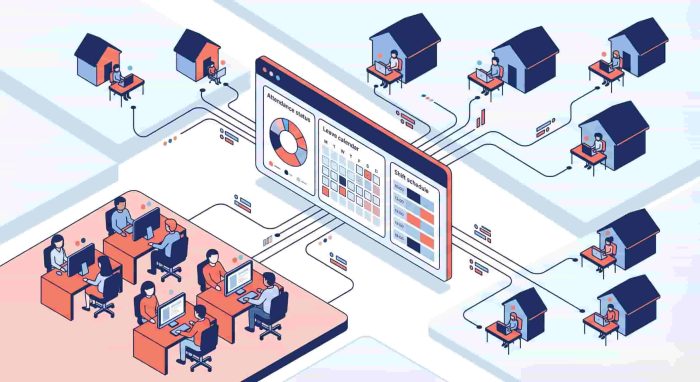
Both platforms generate leave reports — usage by employee, team, or department, absenteeism trends, and balance summaries. Vacation Tracker’s reporting is focused on leave analytics. AttendanceBot’s reporting covers leave alongside hours worked, overtime, and attendance patterns — producing the kind of combined data that payroll teams need for accurate processing.
For HR teams whose reporting needs are leave-specific, Vacation Tracker’s focused reports are sufficient and clean. For teams whose month-end reporting involves reconciling leave with timesheets and attendance records, AttendanceBot reduces the need to pull data from multiple sources.
Where Vacation Tracker Makes More Sense
Vacation Tracker is the right choice when leave management is the whole problem, not one component of a larger workforce management challenge.
Vacation Tracker is easy to use and requires no extra training, so managers can quickly see who’s in or out and handle PTO accruals, rollovers, and custom leave types without the usual fuss.
For small to mid-sized teams with a clear leave management need, no shift scheduling complexity, and employees who work standard hours without timesheets, Vacation Tracker’s simplicity is a genuine advantage. It sets up in minutes, works cleanly in Slack, and handles leave policy complexity without requiring teams to configure tools they won’t use.
Where AttendanceBot Pulls Ahead
AttendanceBot’s advantage grows with organizational complexity — specifically when leave management needs to coexist with other workforce management functions.
Teams managing shift schedules need to know when leave affects coverage. Teams tracking overtime need attendance and hours data alongside leave records. Teams managing hybrid work need visibility into work location status, not just absence status. Teams running payroll need a single export combining approved leave, hours worked, and overtime — not a separate leave export to reconcile manually.
For these teams, adding Vacation Tracker alongside a separate time tracking tool and a separate scheduling tool creates the exact data fragmentation that a unified platform avoids.
Vacation Tracker vs AttendanceBot: Pricing
Both tools offer transparent, per-user pricing. Vacation Tracker’s pricing is available directly on their website and is generally competitive for the leave-focused feature set. AttendanceBot’s pricing reflects its broader feature scope — leave, attendance, time tracking, and scheduling — and is similarly structured per user.
The relevant comparison isn’t the absolute price but the value relative to the use case. For teams that only need leave management, Vacation Tracker’s pricing is likely more efficient. For teams that would otherwise pay for multiple tools — a leave tracker, a time tracking tool, and a scheduling platform — AttendanceBot’s consolidated pricing may represent better overall value.
Final Verdict
Vacation Tracker is a genuinely strong, focused leave management platform. It handles accruals, TOIL, carryovers, and location-based policies cleanly inside Slack and Microsoft Teams — and for teams whose HR complexity lives entirely in leave rules, it’s hard to fault. The simplicity and speed of setup are real advantages for small and mid-sized teams.
AttendanceBot is the right choice when leave management is one component of a larger workforce management need. If your team also tracks attendance, manages shifts, collects timesheets, monitors overtime, or needs hybrid work visibility — having all of that alongside leave management in one Slack-native platform is a meaningful operational advantage.
For teams with simple PTO needs, Vacation Tracker is an excellent, focused option. For organizations managing complex leave policies alongside attendance, scheduling, and time tracking, AttendanceBot offers more flexibility and room to grow as workforce complexity increases.
Vacation Tracker vs AttendanceBot: Frequently Asked Questions
What is the difference between Vacation Tracker and AttendanceBot?
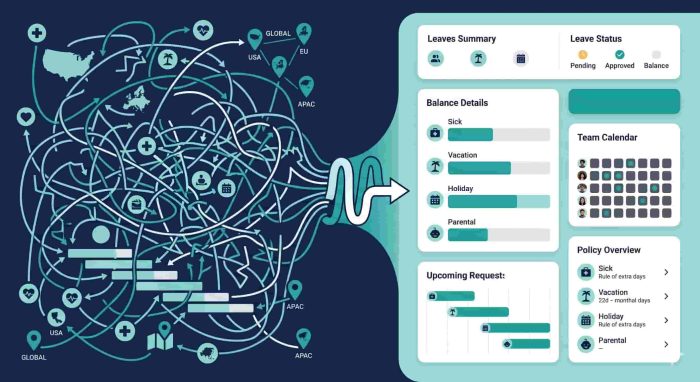
Vacation Tracker is a dedicated leave management platform supporting up to 25 leave types, automated accruals, TOIL, and carryovers inside Slack, Teams, and Google Workspace. AttendanceBot is a broader workforce management platform covering leave management alongside attendance tracking, time tracking, shift scheduling, timesheets, and hybrid work visibility. The core difference is scope — Vacation Tracker does leave well; AttendanceBot does leave plus the surrounding workforce management functions.
Which is better for complex leave policies?
Both platforms handle leave policy complexity well — accruals, TOIL, carryovers, and location-based rules are supported in both. The distinction is what surrounds leave management. For teams whose complexity is purely in leave rules, Vacation Tracker’s focused design is a genuine strength. For teams where leave intersects with scheduling, attendance, and payroll exports, AttendanceBot’s integrated approach avoids data fragmentation across multiple tools.
Which tool is better for remote and hybrid teams?
For remote teams whose primary need is leave tracking across time zones and locations, both tools work well — both support location-based policies and regional holidays. For hybrid teams that also need to track in-office vs remote status day-to-day, AttendanceBot provides hybrid work visibility that goes beyond leave status. Read our hybrid team management guide for a deeper look at hybrid-specific requirements.
Does AttendanceBot support PTO accruals?
Yes. AttendanceBot supports automated PTO accrual tracking, carryover rules, TOIL, and multiple configurable leave types — alongside its attendance tracking and time tracking features.
What is the best leave management software for Slack?
Both Vacation Tracker vs AttendanceBot are strong Slack-native options. Vacation Tracker is best for teams whose primary need is leave management with a clean, simple Slack experience. AttendanceBot is best for teams that need Slack leave management as part of a broader workforce management platform covering attendance, timesheets, and scheduling.